Friday, 27 April 2012

Evaluation


After looking through my film, I have come to the conclusion that a number of improvements can be made for future reference.
One of those improvements would be organisation which I didn't show enough when planning for our days of shooting. However, we eventually over-came this when we recorded all our film as early as possible leaving enough time to edit the film together later on.
Another improvement I'd make would be to film slightly less than what I did for this task. Even though it is always good to film more than what I need, it can be easy to over look the time frame of how long the film actually needs to be which in this case was 2 minutes long. My film was firstly edited down to 2 minutes and 30 seconds put with our extra time for editing I was able to cut that down to the actual time frame while making sure the film still makes sense.
Apart from these few points, I can say that my time completing this project was quite successful.

Looking back at your preliminary task, what do you feel you have learnt in the progression from it to your final product?

Looking over our film and comparing it to our prelim task, we can see a number of major improvements since the film of our prelim.
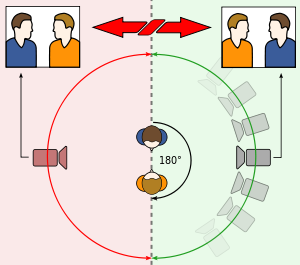
One of the major issues we encountered in the preliminary task was the accidental deviance from the important 180 degree rule when filming a conversation (as shown in the screenshot below). This disoriented the meaning and made some of the sequence less understandable. 

Below is an explanation of what I meant by the 180 degree rule in cinematography.


Another issue encountered was a continuity error wear the camera tri-pod was viewable in the right side of the shot (see screenshot below). This was a mistake and can make a film look quite bad when something like this happens.


However, my team majorly improved our filming techniques from what we produced in our prelim task.
Firstly, we abolished the use of over-the-shoulder shots and went with quick-cuts. I also remembered the 180 degree rule with the angles of the shots so they were level with actual sequence and not disorientating the meaning.


Another very noticeable improvement was the editing which we took the time to tone and perfect to the best of our ability. This included the use of transitions, better use of black and white for the flash back and more meaningful cuts (see screenshot below).


Over the course of this project, I feel that I have made a number of big improvements with the way I direct a film sequence.
The main improvement was my camera shot techniques which have improved significantly as I can see where a shot will make sense from an audience’s perspective.
Another improvement would be my organisation as my group finished filming in quite a short space of time while filming more than we needed. This left us with time to tone and prefect the editing of the film.
One last noticeable improvement is my skills in editing as I now have the ability to make a dull looking shot spring to life with effects, transition and the use of sound to provide understandable meaning.
However, the only thing I can think of that still needs to be improved is our planning techniques as we filmed blind on the day for our first day of filming.


How did you attract/ address your audience?

Interview with an audience member

1. Based on the opening, if it were released as a full production, would you watch the film? And why?
Answer - Yes - Because it looked funny and it has plenty of opportunities to become more action packed

2. Are there any films that you could compare the opening to?

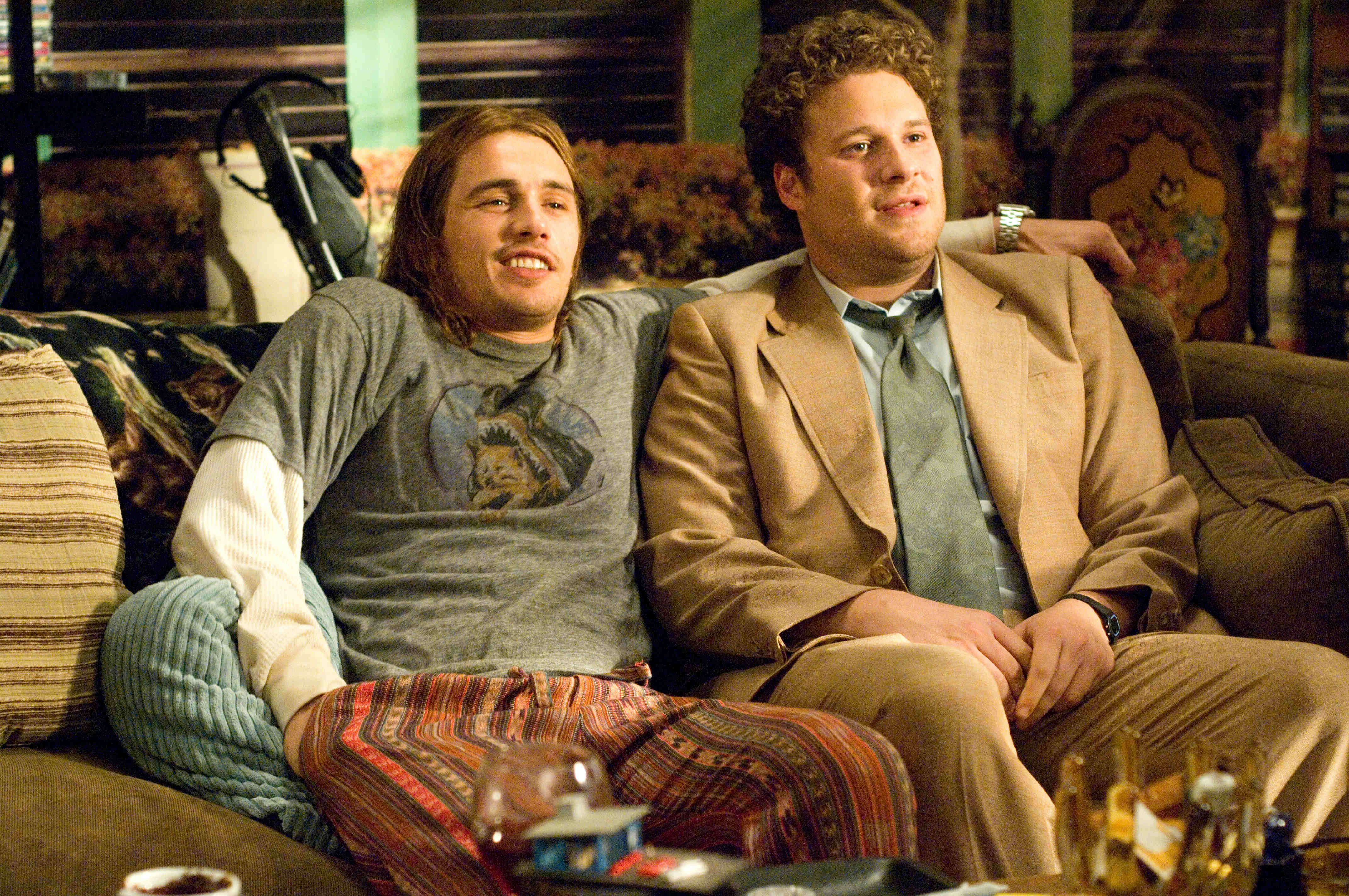
Answer - Pineapple Express 


3. If I hadn't already told you the opening was a Crime Comedy film, what would your opinion be as to what the genres are?
Answer - Crime, Comedy, Action

4. Was there anything that disappointed you or looked rather inaccurate?
Answer - No

5. Was there any particular moments in it that you liked and enjoyed?
Answer - The 'Can of Coke' scene, the 'Kidnapping' scene, the 'Forgot my Keys' scene


6. Overall, what would you rate the opening out of 10?
Answer - 8/10

What have you learnt about technologies from the process of constructing this product?


A camera and microphone were used as part of record the sequence and without these devices it would not have been possible. The microphone was particularly helpful as it was able to pick-up sound we wanted while leaving out unwanted sound from the background.
Adobe Premiere Pro was the editing software used to help pull our film together. It was particularly helpful with cutting up unwanted segments of shot, adding titles, transitions, effects and adding music to provide more meaning.
Blogger.com was used so we can add notes on how the film is going, what needs to be done and how we have gone about film and editing the sequence. It also helped me to give myself an insight on what films should be reference too with the help of YouTube searches.

Who would be the audience for your media product?


Typical audience member profile


  • Name – Chris Keeth
  • Age – 18
  • Location – Manchester
  • Likes/Hobbies – Football, video games and dubstep
  • Dislikes – School
  • Favourite Film Genre – Comedy and action
  • Favourite TV Programmes – The Inbetweeners and Top Gear
My film would appeal mostly to this individual’s interests as it is a comedy and action thriller. Also as he does not like school (stereotypically defines him as a lesser intellect), he will enjoy the action and comedy segments while more intellectual audience members can begin to question the meaning of the film and what actually happens.

What kind of media institution might distribute your media product and why?


A production company is a company that writes, films, and edits the film together. Our production company is a small one made up of 3 people and due to our common interests; we decided to make a more comedic crime film.

A distribution company is a company responsible for selling your film to a cinema-going audience. For our film Powder, we think that it would be best suited if our film is distributed by a more independent company rather than a larger studio such as Universal as we believe the film would only reach out to limited members of the audience.

The main film that inspired the idea for Powder was Pineapple Express directed by David Gordon and starring Seth Rogen and James France. As both films are about showing a more comedic side to drug-use and crime, we thought that these two films would go hand-in-hand therefore making Pineapple Express a very useful reference for Powder.

The people starring in Powder are obviously unknown actors; which is another reason why an independent distribution company would be best suited for our film. As they are unknown, the film would have no unique selling point leaving the possibility of the film becoming a box office flop.

How does your media product represent particular social groups?


The social group this film represents is the innocent drug-user victims of the criminal underworld. This social group have been represented in my film as bumbling morons who are clueless of the real danger they are in. This can easily be referenced to the main two protagonists from Pineapple Express (See second image) who are also characterised in the same way.
Mise-en scene was used in my sequence in such a way that it made the audience question the reality or truth about the lives of the drug users. Whether they actually lived in the house they were in or if they were ever in danger. This was created with the use of the setting and props. The costumes were used to show that they don’t really look after themselves very well and they are slobs.


In what ways does your media product use, develop or challenge form and conventions of real media products?

Powder – Title big and bold to make it stand out. Colour is more of a tinted light blue to represent drugs-use and unnatural deviance.

Titles – Small but bold. This makes the title of the actors and director stand-out from the scene.

Location – Set mainly in a modern home. Made to seem unnaturally tidy for a couple of drug dealers to live in. This makes their ownership of the house questionable.

Costume/Props – Coke can used as a comical device as shown in the image. With this device used, the conventions of a normal crime film are then challenged making the story slightly bubbly.

Lighting – This lighting shown in the shot below was produced by a spotlight making the scene more distinguishable as an interrogation. This use of lighting follows the norms and conventions that a crime film should. 

Characterisation – The characters in this film have been developed with a more comedic characterisation to them. This turns the stereotypical view of a normal drug user/dealer on its head as most of them are never really viewed as bumbling idiots in this extent.

Camera Angles – The camera angle used in the shot below is a cut-away which helps to introduce the main protagonist of the film. The rest of the sequence is made up of more quick-cuts because it adds a sense of tension between the realities of what the characters don’t really see as danger.

Editing/Transitions – The editing in this sequence is mainly left normal with cuts between the characters conversation and the passing of the coke can as a cut-away. But for the flashback, we changed the colour scheme to black and white as we wanted to make the present and the past more of a contrast to show what is real. The transitions used are also white fades to help move from one memory to the next.

Genre – Our opening sequence quite quickly defines what the rest of the film will be like because of the use of black comedy humour with drug use on the side. Sections of the sequence which aid with this are when Arth was laughing at a blank TV, Jim getting coke instead of cocaine and when Arth forgets his keys. The characters were also characterised with comedic values to help this along and to make the comedy go with their bumbling qualities.

Wednesday, 25 April 2012

The Edit

For our editing process we managed to film more than we actually needed which is always good. However, This caused us to edit the title sequence into 3 minutes which is a minute over the limit. So we eventually managed to edit the film down to less than 2 minutes through painstakingly cropping and deleting shots while still making sure that the actual sequence still made sense. This is more of a neutral point of our editing process but it is still probably a good idea to take into account the time frame of the sequences we need to edit.

Most of my editing techniques were inspired by the works of Alfred Hitchcock and Martin Scorsese. These techniques included flashback, long panning and efficient characterization right at the start. However, I wanted the sequence to remain more comedic so I kept these inspirations to a minimum leaving most of the usage more subliminal.

For the flashback we featured black and white colouring as we wanted to make the sequence more distinguishable between what is past and present.This leaves the film more questionable with what might have actually happened.


Another point to make is the sound use through-out the sequence. As the film is aimed as more of a comedy/crime film, we wanted to make the music as playful as possible while keeping a slight normality with the real-world. This use of music gives the audience an idea that the main characters are more like children than adults. Playful music is used throughout the sequence except for the flashback where we decided to use ambiance to cover over the sound. This makes the present and past even more distinguishable from each other.

One continuity error we can name from our sequence in editing is the TV being off during the first few seconds. We originally wanted to make this kind of ironic giving off the possibility that Big Arth (The character laughing on the sofa) was high at the time and hallucinating. However, this idea didn't go well with our audience as they couldn't understand why the TV was actually off.


Tuesday, 24 April 2012

Shooting Schedule


15/02/2012
·         Shooting sequences in Big Arth & Jim’s home.
·         Using Luke Bravin’s home as the setting for this sequence.
·         Shots include panning intro, back and too conversation between Arth and Jim and the ending of the sequence.
·         Luke Mallia and Luke Bravin were the only actors needed.
·         Props included a coke can and keys.
·         Costumes worn were more dingy to show they the characters don’t look after their appearance.

24/02/2012
·         Shooting first segment of the flashback sequence.
·         This includes Jim receiving the coke and being kidnapped.
·         Filmed outside the run-down part of Grove School.
·         Luke Bravin and 2 extra’s posing as goons were need for this shot.
·         Props included a bag or flour representing cocaine and a gun.
·         Costumes included the goons wearing leather jackets.

06/03/2012
·         Shooting last segment of the flashback sequence.
·         This includes the kidnappers taking Jim to a warehouse and interrogating him.
·         Filmed in the film studio with dark lighting to represent an industrial building.
·         Actors included Luke Bravin and Luke Mallia. Luke Mallia the interrogator and Big Arth in this film so we shot from behind the interrogator to avoid confusion within the audience.
·         Props included a table, spotlight, a gun, scissors and two chairs.
·         Costumes included were the interrogator wearing a leather jacket and sunglasses to make him look more important within the criminal underworld.

Wednesday, 18 April 2012

The Pitch

I attempted to pitch my film to the class as a comedy action crime thriller. However, our planning for the pitch was a little off so I had to improvise the idea a little. But this proved to be quite a plus point for planning as ideas for the film came to our group on the spot and we eventual used a few of them.

Even though we didn’t put much planning into our idea, we were still able to produce a PowerPoint, which displayed a few ideas and even references for us to take on while we discussed our film. However, the points used on our PowerPoint were quite drastically changed to suit the simplicity of our story idea. These changes included characterisation, overall story, background story, costume and eventually props too.

We also received several pieces of feedback from our pitch, which were quite helpful for future reference. These were to be more organised which was an obvious minus point to take from our pitch. So I plan on taking more time for planning and making sure we have things to talk about. However, a plus point of our pitch was my group was apparently quite charismatic and we were able to draw in the audience we were trying to pitch our idea to.

Friday, 9 March 2012

Update 09/03/2012

As  of this post, I have managed to record over 90% of the film. All we need to do now is record a small torture scene which only involves 4-5 shots more shots. We will be recording this in our college media studio with a possible chroma key effect.

After this is done we will be moving on to the editing stage which will hopefully be done within the deadline.

Friday, 24 February 2012

Crime Film Script


 *Big Arth lying on a sofa watching TV and laughing. The TV isn’t on*
*Jimmy enters and sits on the other sofa*

Jimmy: You will not believe the day I’ve had!

Big Arth: I don’t really care to be honest, Jimmy.

Jimmy: Wow! Thanks Arth. I really do appreciate the sympathy and the interest in how crap my day has been.

Big Arth: Well… *pause* I don’t care since all I want is that coke I sent you to get.

Jimmy: Oh yeah! Here you go. *giddy face*

*Takes cola bottle from pocket and hands it over to Big Arth*

Big Arth: What’s this!?

Jimmy: The coke you asked for…

Big Arth: I meant coke as in the drug! Coke!

Jimmy: Oh yeah! Right, I’ve got that stashed somewhere. Let me find it…

*Reaches into pockets taking out comical and household items*

Jimmy: Eeerrrrmm…

Big Arth: What?

Jimmy: Okay, so maybe I don’t have the coke…

Big Arth: WHAT!?

Jimmy: Hey, it wasn’t my fault! It was the dealer! He was… Dodgy.

Big Arth: Ok, so what happened? Why has your day been so terrible?

Jimmy: Well…

*Fade to white and into a flashback form. Flashback reveals Jimmy’s day with a consistent Edgar Wright-esque voice over*
Jimmy (V/O): …first off, I went to our usual dealer, but he wasn’t there. Instead some guy was there and he offered me the coke for free, which was quite nice. He then ran off, so I went on my way. As I was on my way back some goons grabbed me and put a bag round my head. I then woke up in some dark room with a light shining on me. Some weird boss type guy was asking me questions about the drugs but I had no way of answering him. He then pulled a gun on me and threatened to do terrible things tour dealer. I then blacked out and woke up in the middle of the street…

Big Arth: He’s gonna kill our drug dealer!?

Jimmy: Yep.

Big Arth: Crap! Right, so what did this boss type guy look like?

Jimmy: He wore a nice suit and was very evil… Oh! And he had a gun!

Big Arth: Nice suit? There’s only one person in the whole of Wrexham who has a nice suit…

Jimmy: Tell me about him!

Big Arth: I’m surprised he didn’t kill you! You were face to face with Wrexham’s number one dealer!

Jimmy: That’s not really something to brag about…

Big Arth: Shut up and stop being such an idiot! This guy is dangerous! Our dealer is in danger! Come on!

Jimmy: Where are we going?

Big Arth: To find that bloke who gave the coke…

*Both leave room*

*Titlecard*

*Scene end*

Friday, 10 February 2012

Locations & Props

Our locations are as follows...
  • A house 

  • A street corner

  • TV studio located on college campus

Our props are as follows...

  • Scissors


  • Cola can

Mood Board


Thursday, 9 February 2012

Audience Research

To carry out research into my potential target audience, I set a group of people some questions to answer related to my film idea.
The questions included:

  • How old are you?
  • How many times a month do you visit your local cinema?
  • What is your favourite film of all time?
  • What is your favourite genre?
  • Who is your favourite actor/actress?
With these questions set out as a questionnaire, I was able to receive a result as to what a modern teen audience would want from a film. 
The results I found were that most teens would either go see a horror/thriller or a comedy film. This gave me the idea that the perfect film film for this audience would be an action comedy with a few aspects of a thriller. As teens/students are part of the age range that go to the cinema the most, it made sense to aim the film at them making people from 12-25 years old the target audience.

Production and Distribution


My groups production company is collectively been named “Trololololol Productions” in relation to our comedic ideas we have for our main film. We aim to sell our film to a more critical audience who like twist and attempting to distinguish the real. However, we will also concentrate our film on fans of classic crime and action films including the likes of Bruce Willis and Jason Statham fans, staying truthful to their conventions yet adding extra comedy factors too.
As our film isn't know and will most likely hardly make any money, it might be best to release it on a video sharing sight such as YouTube so that millions can see it for free. This will help to determine if people would actually watch a film such as Powder made by a group of amateur film makers.
Another thing to take into account for distributing our film is the age rating. As we want to keep the range of audience members to a max while keeping the dark humour, we would be aiming for a 12 certificate as this would open up a whole range of teenagers to view the film. However, because of the use of drugs it will most likely get pushed up to a 15 certificate.


12 Rating (Suitable for 12 years or over, used for films on DVD's) 

15 Rating (Suitable for 15 years or over)

Analysis of a Title Sequence - Crank


The title sequence of Crank (Neveldine & Taylor, 2006) is completely unique and extremely fast-paced compared to other films, creating a sense of unrealism. But at the, the protagonist Chev Chelios discovers that he has been injected with a deadly poison which if his heart rate drops below a certain level, kills him. Chev gets out of bed and a flood of flashbacks and memories from what happened to him come into mind, setting the backstory of the film. The title sequence ends with Chev exiting his apartment, getting into his car and then calling his doctor for advice on how to treat the poison. Throughout these shots, its established several times that Chev is in-fact infected with the poison with CGI shots of his veins and inside his slowly deceasing body.