Friday, 27 April 2012

Evaluation


After looking through my film, I have come to the conclusion that a number of improvements can be made for future reference.
One of those improvements would be organisation which I didn't show enough when planning for our days of shooting. However, we eventually over-came this when we recorded all our film as early as possible leaving enough time to edit the film together later on.
Another improvement I'd make would be to film slightly less than what I did for this task. Even though it is always good to film more than what I need, it can be easy to over look the time frame of how long the film actually needs to be which in this case was 2 minutes long. My film was firstly edited down to 2 minutes and 30 seconds put with our extra time for editing I was able to cut that down to the actual time frame while making sure the film still makes sense.
Apart from these few points, I can say that my time completing this project was quite successful.

Looking back at your preliminary task, what do you feel you have learnt in the progression from it to your final product?

Looking over our film and comparing it to our prelim task, we can see a number of major improvements since the film of our prelim.
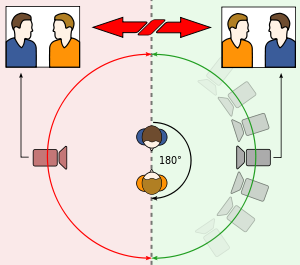
One of the major issues we encountered in the preliminary task was the accidental deviance from the important 180 degree rule when filming a conversation (as shown in the screenshot below). This disoriented the meaning and made some of the sequence less understandable. 

Below is an explanation of what I meant by the 180 degree rule in cinematography.


Another issue encountered was a continuity error wear the camera tri-pod was viewable in the right side of the shot (see screenshot below). This was a mistake and can make a film look quite bad when something like this happens.


However, my team majorly improved our filming techniques from what we produced in our prelim task.
Firstly, we abolished the use of over-the-shoulder shots and went with quick-cuts. I also remembered the 180 degree rule with the angles of the shots so they were level with actual sequence and not disorientating the meaning.


Another very noticeable improvement was the editing which we took the time to tone and perfect to the best of our ability. This included the use of transitions, better use of black and white for the flash back and more meaningful cuts (see screenshot below).


Over the course of this project, I feel that I have made a number of big improvements with the way I direct a film sequence.
The main improvement was my camera shot techniques which have improved significantly as I can see where a shot will make sense from an audience’s perspective.
Another improvement would be my organisation as my group finished filming in quite a short space of time while filming more than we needed. This left us with time to tone and prefect the editing of the film.
One last noticeable improvement is my skills in editing as I now have the ability to make a dull looking shot spring to life with effects, transition and the use of sound to provide understandable meaning.
However, the only thing I can think of that still needs to be improved is our planning techniques as we filmed blind on the day for our first day of filming.


How did you attract/ address your audience?

Interview with an audience member

1. Based on the opening, if it were released as a full production, would you watch the film? And why?
Answer - Yes - Because it looked funny and it has plenty of opportunities to become more action packed

2. Are there any films that you could compare the opening to?

Answer - Pineapple Express 


3. If I hadn't already told you the opening was a Crime Comedy film, what would your opinion be as to what the genres are?
Answer - Crime, Comedy, Action

4. Was there anything that disappointed you or looked rather inaccurate?
Answer - No

5. Was there any particular moments in it that you liked and enjoyed?
Answer - The 'Can of Coke' scene, the 'Kidnapping' scene, the 'Forgot my Keys' scene


6. Overall, what would you rate the opening out of 10?
Answer - 8/10

What have you learnt about technologies from the process of constructing this product?


A camera and microphone were used as part of record the sequence and without these devices it would not have been possible. The microphone was particularly helpful as it was able to pick-up sound we wanted while leaving out unwanted sound from the background.
Adobe Premiere Pro was the editing software used to help pull our film together. It was particularly helpful with cutting up unwanted segments of shot, adding titles, transitions, effects and adding music to provide more meaning.
Blogger.com was used so we can add notes on how the film is going, what needs to be done and how we have gone about film and editing the sequence. It also helped me to give myself an insight on what films should be reference too with the help of YouTube searches.

Who would be the audience for your media product?


Typical audience member profile


  • Name – Chris Keeth
  • Age – 18
  • Location – Manchester
  • Likes/Hobbies – Football, video games and dubstep
  • Dislikes – School
  • Favourite Film Genre – Comedy and action
  • Favourite TV Programmes – The Inbetweeners and Top Gear
My film would appeal mostly to this individual’s interests as it is a comedy and action thriller. Also as he does not like school (stereotypically defines him as a lesser intellect), he will enjoy the action and comedy segments while more intellectual audience members can begin to question the meaning of the film and what actually happens.

What kind of media institution might distribute your media product and why?


A production company is a company that writes, films, and edits the film together. Our production company is a small one made up of 3 people and due to our common interests; we decided to make a more comedic crime film.

A distribution company is a company responsible for selling your film to a cinema-going audience. For our film Powder, we think that it would be best suited if our film is distributed by a more independent company rather than a larger studio such as Universal as we believe the film would only reach out to limited members of the audience.

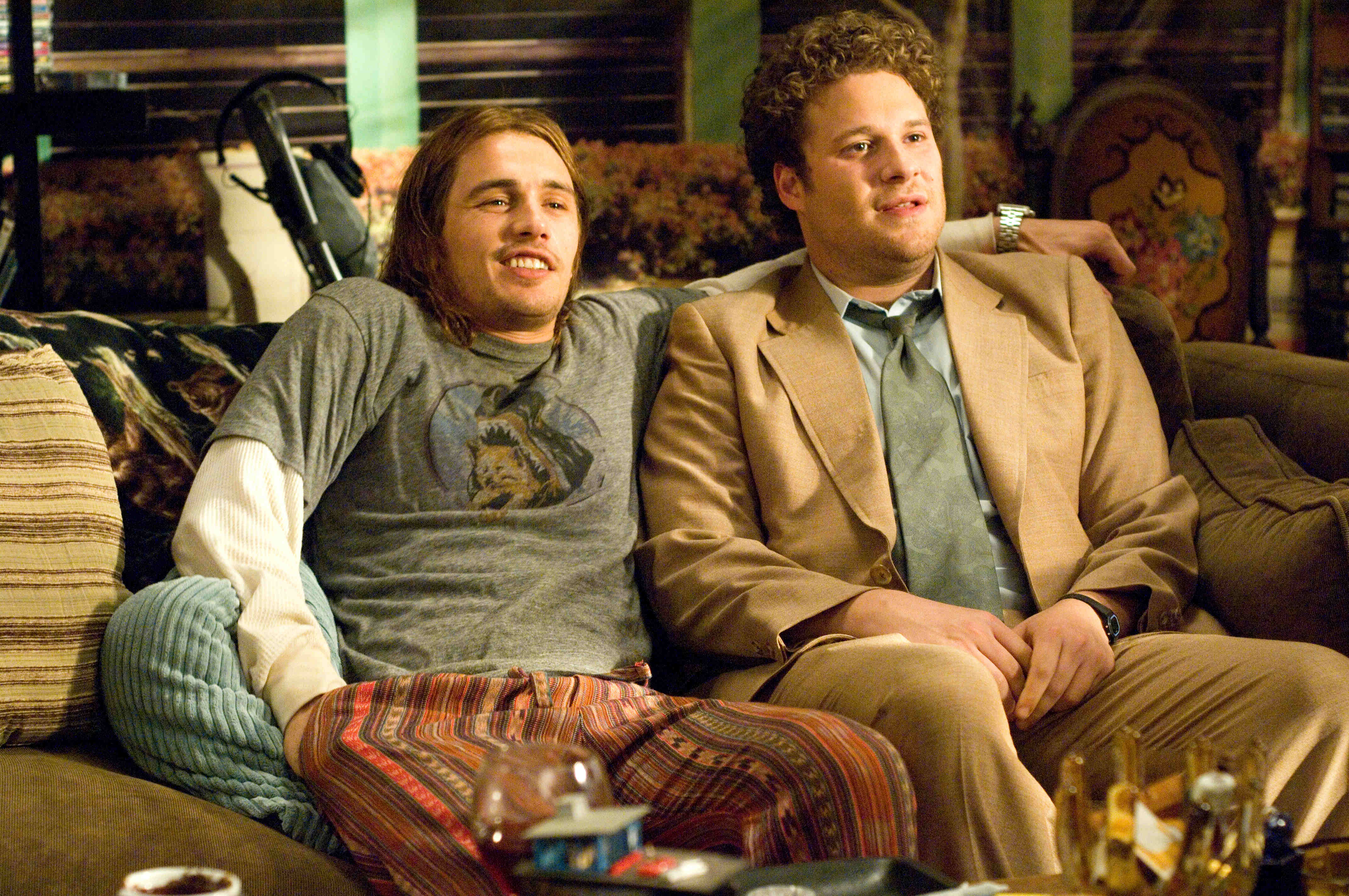
The main film that inspired the idea for Powder was Pineapple Express directed by David Gordon and starring Seth Rogen and James France. As both films are about showing a more comedic side to drug-use and crime, we thought that these two films would go hand-in-hand therefore making Pineapple Express a very useful reference for Powder.

The people starring in Powder are obviously unknown actors; which is another reason why an independent distribution company would be best suited for our film. As they are unknown, the film would have no unique selling point leaving the possibility of the film becoming a box office flop.

How does your media product represent particular social groups?


The social group this film represents is the innocent drug-user victims of the criminal underworld. This social group have been represented in my film as bumbling morons who are clueless of the real danger they are in. This can easily be referenced to the main two protagonists from Pineapple Express (See second image) who are also characterised in the same way.
Mise-en scene was used in my sequence in such a way that it made the audience question the reality or truth about the lives of the drug users. Whether they actually lived in the house they were in or if they were ever in danger. This was created with the use of the setting and props. The costumes were used to show that they don’t really look after themselves very well and they are slobs.